The Advocacy and Impact of Deborah Stipek
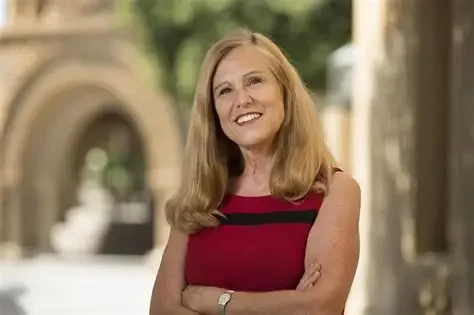
Early childhood education shapes how children develop as thinkers and learners. While literacy has traditionally received the greatest attention in early grades, mathematics is equally essential for long-term academic success. Research indicates that early math knowledge is a strong predictor of later achievement across content areas (Duncan et al., 2007). Deborah Stipek has played a significant role in shifting attention toward early mathematics by advocating for stronger instructional practices and greater access to meaningful learning experiences. Her work continues to influence how educators approach teaching and learning in the early years.
Background and Leadership
Deborah Stipek is a scholar in early childhood education whose work is grounded in developmental psychology and educational research. She previously served as Dean of the Stanford Graduate School of Education, where she focused on improving educational outcomes through research-informed practice. Her leadership extends beyond higher education into national conversations about early learning. She serves as the faculty director and chair of the Development and Research in Early Mathematics Education (DREME) Network, a national initiative designed to improve mathematics learning for children from birth through age eight. Through this role, she has contributed to advancing research, supporting educators, and strengthening the connection between families and early math learning.
Contributions to Early Childhood Mathematics
Elevating Early Math as Essential
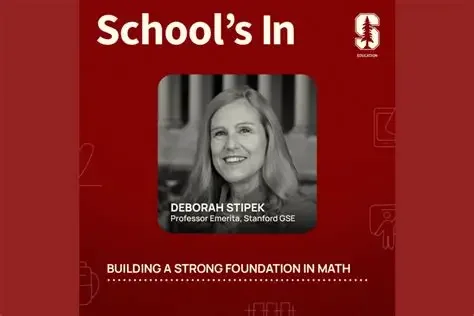
Stipek’s work has been instrumental in reframing early mathematics as a critical component of early learning rather than a secondary priority. Many early childhood programs have historically focused more heavily on literacy, which has limited opportunities for children to engage deeply with math concepts. Stipek emphasizes that young children are capable of developing strong mathematical understanding when provided with appropriate learning experiences (Stipek, 2017).
Her advocacy aligns with research demonstrating that early mathematical competencies, such as number sense and problem solving, are foundational for later success in school (Duncan et al., 2007). By bringing attention to this evidence, she has helped shift instructional priorities within early childhood education.
Bridging Research and Classroom Practice
A central strength of Stipek’s leadership is her ability to connect research with practical application. Through DREME, she supports the development of resources that translate research findings into strategies teachers can implement in everyday instruction. These resources emphasize the integration of math into play, conversation, and routine activities. This approach reflects best practices in mathematics education, which highlight the importance of conceptual understanding, discourse, and active engagement (National Council of Teachers of Mathematics, 2014). By making research accessible, Stipek has helped educators move toward more meaningful and effective math instruction.
Advocacy for Equity in Early Learning
Equity remains a central focus in Stipek’s work. Access to high-quality early math experiences is not consistent across all communities, and these differences can contribute to long-term disparities in achievement. Stipek advocates for instructional practices that ensure all children have opportunities to engage in rigorous and meaningful mathematics learning. Her work aligns with broader research emphasizing the need to address inequities in early childhood education through intentional teaching and supportive learning environments (NAEYC, 2020). By focusing on equity, she supports efforts to improve outcomes for historically underserved populations.
Challenges in Early Childhood Mathematics
Despite increased awareness, early mathematics education continues to face several challenges. Stipek’s work addresses these persistent issues:
Limited instructional emphasis on mathematics
Early childhood classrooms often prioritize literacy, which can reduce time spent on math learning.
Gaps in teacher preparation
Many educators report feeling less confident teaching mathematics due to limited training and professional development.
Misconceptions about young learners
There is a common belief that young children are not ready for complex mathematical thinking, which can restrict instructional opportunities.
Research shows that young learners are capable of engaging in higher-level thinking when instruction is intentional and developmentally appropriate (National Council of Teachers of Mathematics, 2014). Stipek’s work helps challenge these misconceptions by promoting evidence-based practices.
Impact on Educators, Families, and Students
Impact on Educators
Stipek’s contributions provide educators with tools and strategies to create math-rich learning environments. Her work encourages teachers to incorporate discussion, exploration, and hands-on learning into daily instruction. These practices support deeper understanding and student engagement.
Impact on Families
Families play a critical role in early learning, and Stipek’s work emphasizes their importance. Through DREME, families are encouraged to integrate math into everyday routines such as cooking, shopping, and play. These experiences help children develop mathematical thinking in meaningful contexts.
Impact on Students
Students benefit from early exposure to high-quality math experiences that promote curiosity and problem solving. These opportunities support the development of confidence and persistence, which are essential for long-term academic success.
Leadership and Advocacy Approach
Deborah Stipek’s leadership reflects a collaborative approach that brings together researchers, educators, and families. Rather than focusing on isolated solutions, she promotes sustained improvement through shared responsibility and collective effort. Her work demonstrates how leadership can influence both practice and policy. By advocating for early mathematics and supporting research-informed instruction, she has contributed to meaningful change within early childhood education.
Why Her Work Matters Today
There is growing recognition of the importance of early learning, yet mathematics continues to require stronger advocacy. Stipek’s work remains highly relevant as educators seek to improve instructional quality and address achievement gaps. Her contributions highlight the importance of creating learning environments where children can explore, question, and engage deeply with mathematical ideas. These experiences support not only academic success but also the development of critical thinking skills.
Conclusion
Deborah Stipek has made a lasting impact on early childhood education by advocating for the importance of early mathematics. Through her leadership, research, and commitment to equity, she has helped reshape how educators approach teaching and learning in the early years. Her work continues to influence classrooms, families, and educational systems, providing a strong foundation for ongoing improvement in early mathematics education.
References
Duncan, G. J., Dowsett, C. J., Claessens, A., Magnuson, K., Huston, A. C., Klebanov, P., Pagani, L. S., Feinstein, L., Engel, M., Brooks-Gunn, J., Sexton, H., Duckworth, K., & Japel, C. (2007). School readiness and later achievement. Developmental Psychology, 43(6), 1428–1446.
National Association for the Education of Young Children. (2020). Developmentally appropriate practice in early childhood programs serving children from birth through age 8 (4th ed.). Author.
National Council of Teachers of Mathematics. (2014). Principles to actions: Ensuring mathematical success for all. Author.
Stipek, D. (2006). No Child Left Behind comes to preschool. The Elementary School Journal, 106(5), 455–466.
Stipek, D., Feiler, R., Daniels, D., & Milburn, S. (1995). Effects of different instructional approaches on young children's achievement and motivation. Child Development, 66(1), 209–223.
Development and Research in Early Mathematics Education. (n.d.). Early math resources for teachers and families.